
Step one
Observe
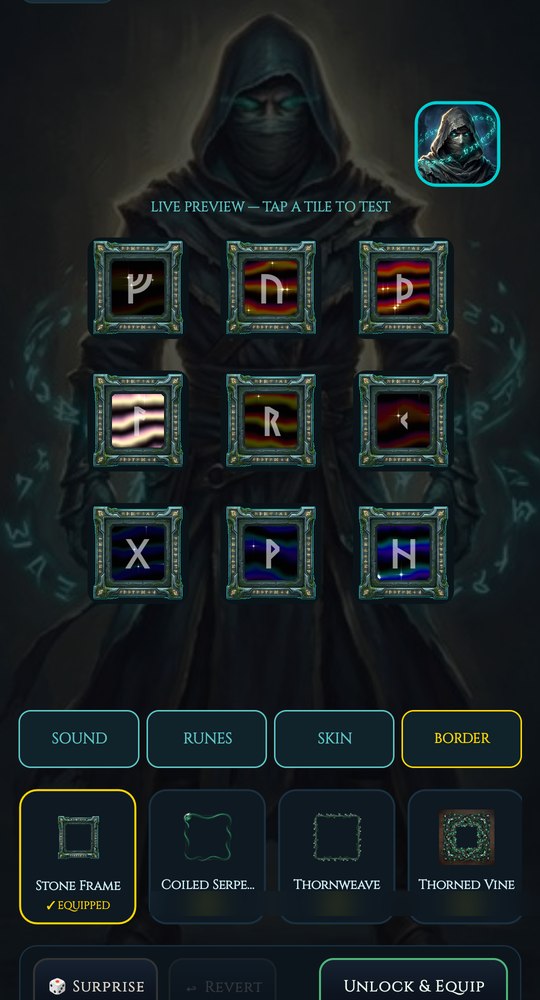
Runic tiles light up in order on a grid you choose, from a gentle 3×3 to a punishing 6×6. Every round adds one more glyph to hold.

Glyphs flash in order. You repeat them from memory — and in combat that memory is both your sword and your shield.
A taste of the core mechanic, in your browser.
The core loop
Three seconds to learn, a long way to master. Everything else in the game is pressure applied to this one skill.
Step one
Runic tiles light up in order on a grid you choose, from a gentle 3×3 to a punishing 6×6. Every round adds one more glyph to hold.
Step two
Tap the sequence back from memory. Speed is part of the score: a fast, clean recall is worth more than a hesitant one.
Step three
In combat the forward repeat is your attack, and the same sequence in reverse is your defence. A perfect reversal blocks the incoming hit completely.
Five ways to play
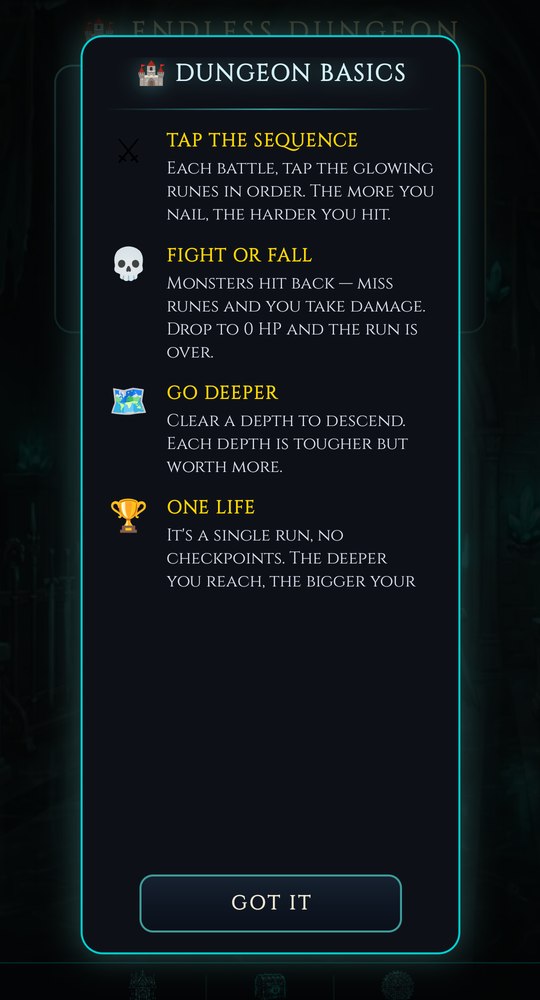
Endless rounds at the grid size and difficulty you set, with an anomaly arriving every fifth round. The place to warm up, experiment, or chase a personal best.
A roguelike descent through generated floors: monsters, treasure, rest sites and a boss guarding the way down. Equipment carries the run, and death ends it.
Five chapters of hand-built maps with authored encounters, characters and dialogue. No fog of war and no loot — just the road the designers laid.
Head-to-head duels on a shared seed, so both sides face the identical sequence. Host a match, join a friend, or take a quick match.
Competitive duels played for rating points, league placement and a position on the global leaderboard.
The Daily Dungeon is a recurring challenge rather than a sixth mode: one attempt per day, on a seed every player shares.
Inside a run
Captured from the game, not mocked up.
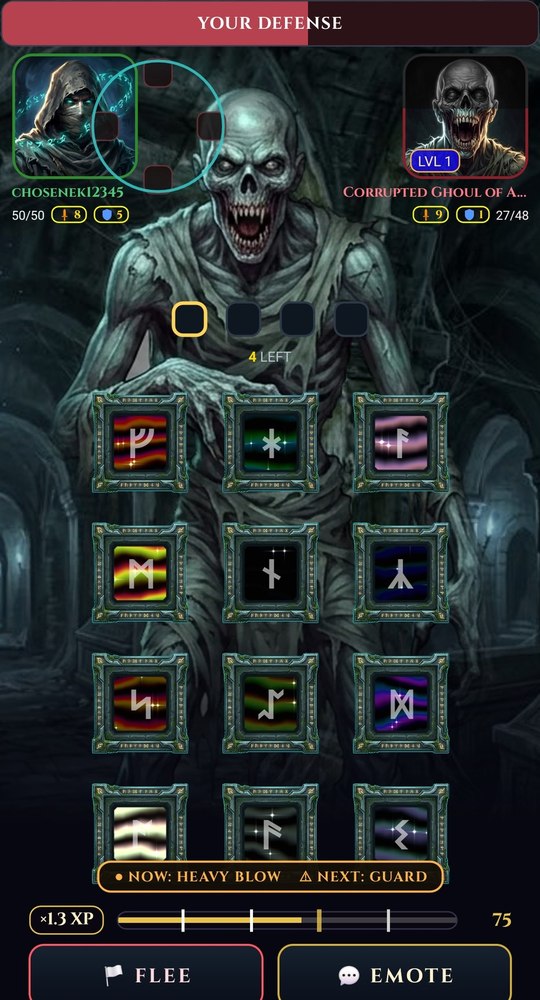
CombatThe thing you are fighting looms behind the board. The banner tells you what it is about to do — and whether this round is your attack or your defence.
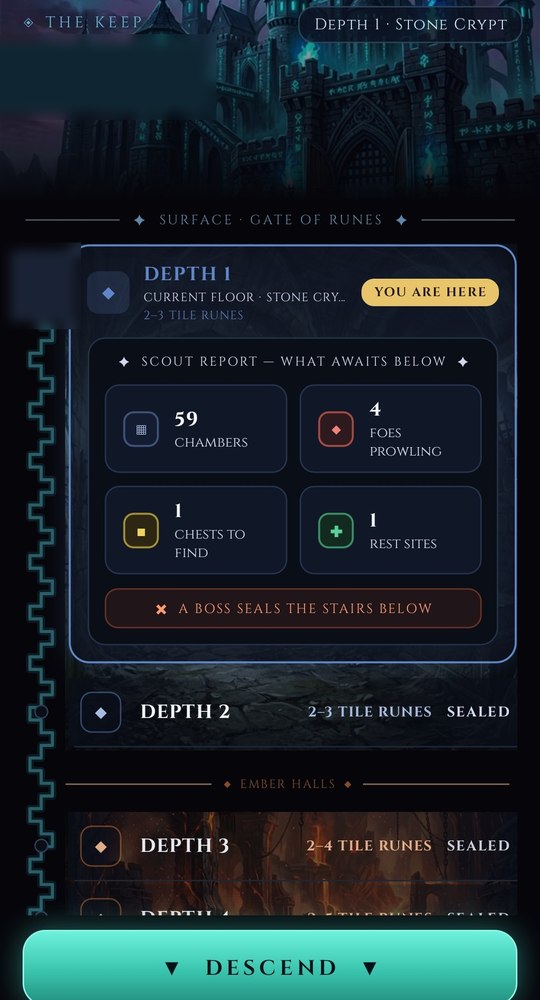
Before you go downEach depth is scouted before you commit: how many chambers, how many foes, what is worth finding — and the boss between you and the next floor.
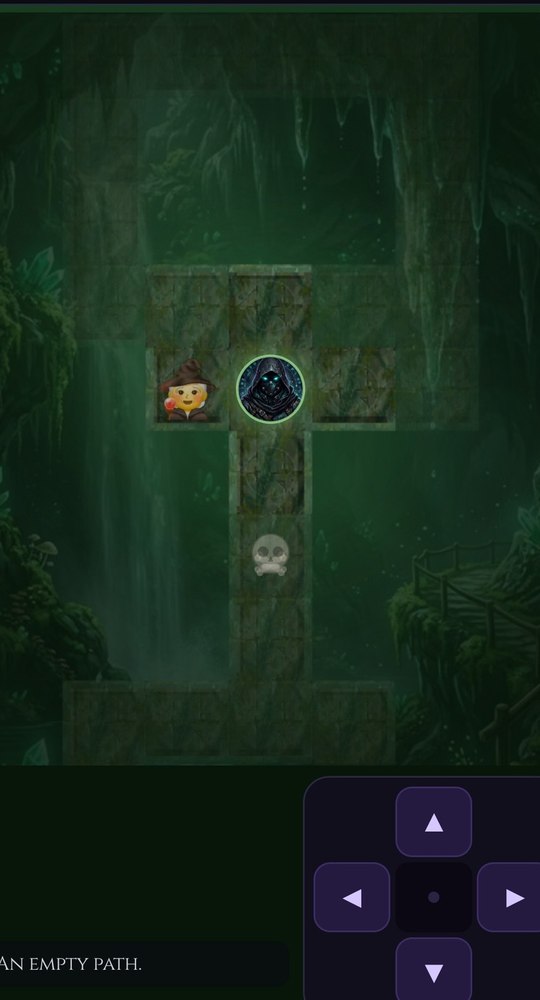
The floor itselfYou walk it tile by tile. A skull is something waiting, a chest is something worth the detour, and the fog only lifts where you have been.
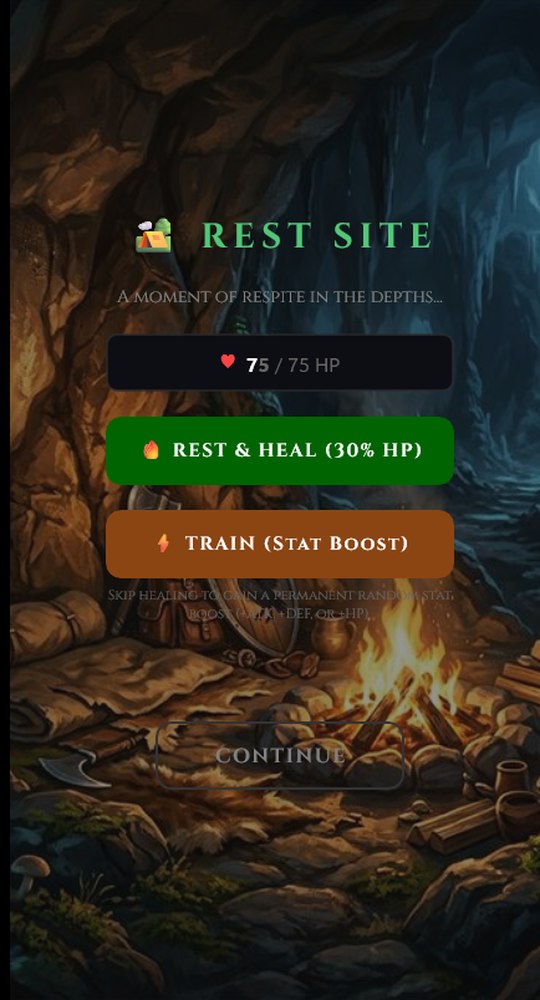
Rest sitesA moment of respite in the depths: recover health, train for a stat boost, or change what you have equipped.
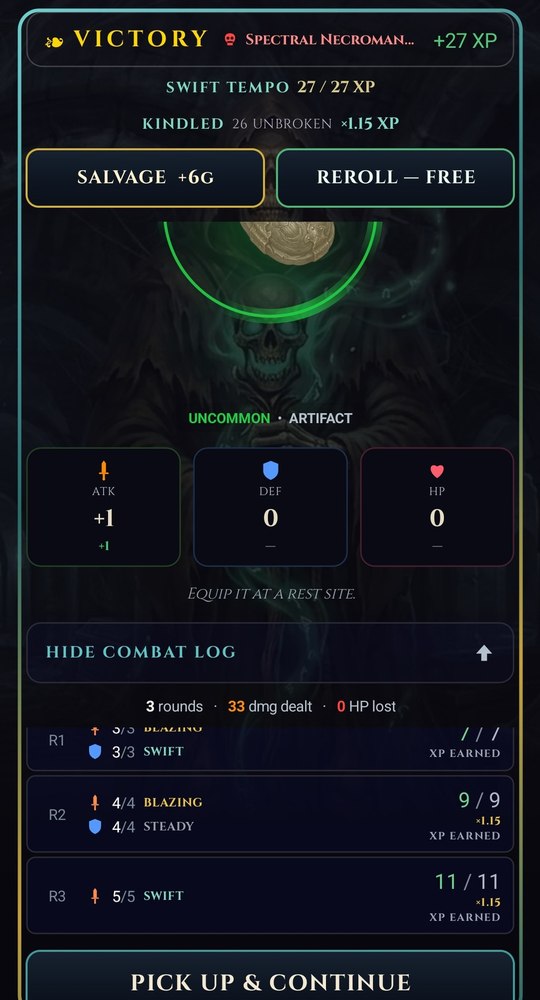
After the fightEvery round is itemised — tiles recalled, speed, damage. Drops are stowed in your pack, and you equip them at the next rest site.
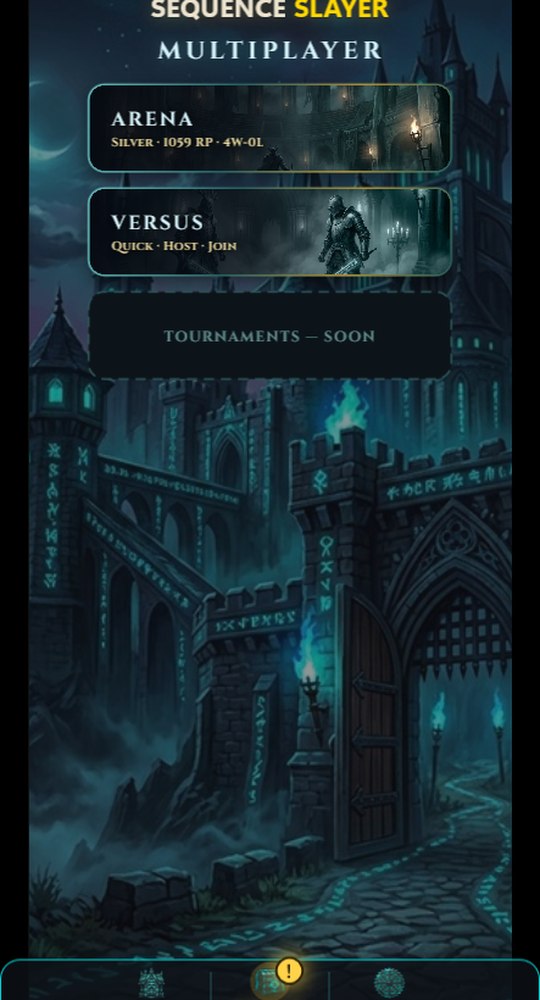
Against other peopleRanked Arena carries your league and rating. Versus is the casual side — quick match, host, or join a friend.
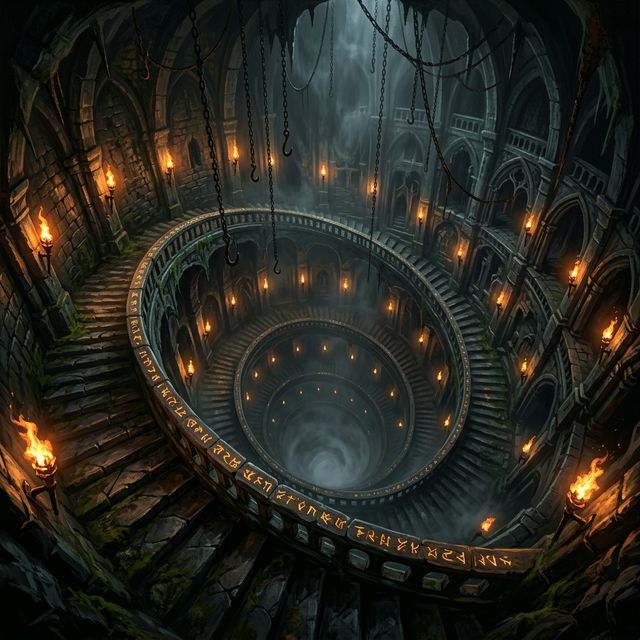
Dungeon progression
Campaign floors are generated rather than memorised.
You move from node to node through fog of war, turning over monsters, treasure, locked caches and rest sites on the way to the boss that guards the stairs down.
Floor themes rotate through stone crypts, ember halls, jade caverns, obsidian depths and frost sanctums, so the deeper you go, the less familiar the ground looks. Loot fills a limited backpack, and what you decide to carry shapes what you can survive.
Anomalies
Recognising the anomaly is half of surviving it. They arrive on a schedule you can feel coming, but never quite prepare for.
Playback runs backwards. What you just learned to read forwards now has to be read the other way.
False glyphs join the real ones during playback. Only some of what lights up belongs to the sequence.
Tiles disappear after they flash. You finish the round on a board that no longer looks like the one you memorised.
Tiles quietly swap places between playback and input. Position stops being a reliable anchor.
The rhythm refuses to settle. Timing you had internalised becomes something you have to actively track.
The audio cue drops out entirely, and the crutch you did not know you were leaning on goes with it.
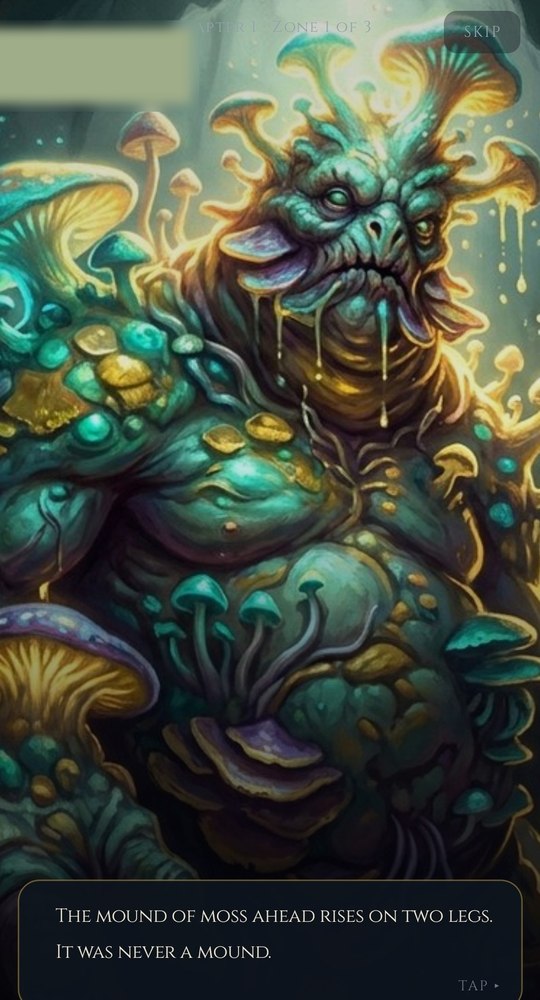
Authored story
Nothing here is randomised.
Alongside the generated dungeons runs a hand-written campaign: five chapters, each with its own maps, encounters and characters. Every fight and every conversation sits exactly where it was placed.
Bosses close chapters instead of merely gating the next floor, and the people you meet along the way have something to say before and after the fighting.
On the device
Portrait, offline-friendly menus, and a board that stays reachable however large you set it.
Competition
Duels run both players on the same sequence, so nobody wins on a kinder board. The only variable left is recall.
Rating points, league placement and a global leaderboard. Matchmaking pairs you against other people, and the ladder around you also carries a seeded roster of house rivals, so the board is never empty.
One attempt per day on a seed every player shares. No retries, no second reading — the same descent for everyone.
Release
Sequence Slayer is being prepared for release on Android. When the store listing goes live it will be linked from this page. Until then, questions and press enquiries are welcome.